RVing With a Disability: Making the Open Road More Accessible
One of the things I have always appreciated about RVing is the freedom it gives us. We can travel at our own pace, bring many of the comforts of home with us, and see parts of the country that we might otherwise never experience.
But what happens when age, an injury, illness, or a permanent disability makes getting around more difficult?
It turns out that RVing may still be a very realistic option. Accessible campgrounds, specially designed RVs, aftermarket modifications, and some careful trip planning can make RV travel possible for people with a wide range of mobility limitations.
That doesn’t mean it is always easy. As with many things involving RV travel, what is advertised and what you actually find when you arrive can be two different things.
What Got Me Thinking About This
My wife recently had total knee replacement surgery, and it got me thinking about our last camping trip of the season, which is coming up in a few weeks. Her recovery is progressing as expected, but I find myself wondering whether she will be ready to handle the steps getting in and out of our fifth wheel.
Her situation is temporary, but it reminded me of something that happened many years ago.
At the time, we had a tent trailer, and my daughters were probably between 8 and 12 years old. We did a lot of camping, both weekends and summer vacations. Like most kids, once we arrived at a campground they wanted to get to the pool or go play. We had a rule, though: none of that happened until we were set up for the night.
We gave each of them jobs to do during setup and again when it was time to pack up. They quickly learned that if everyone worked together, we finished faster and the fun could begin. They actually enjoyed being part of the process.
On one trip to Florida, we stopped overnight at a campground with a pool. The girls were especially motivated to get everything set up so they could go swimming. Our site was next to a Class A motorhome, and while we were setting up I noticed an elderly man watching us through the window. I didn’t think much about it.
The next morning, the girls knew our next stop was Disney World, so as soon as breakfast was finished they got busy with their pack-up jobs.
Just as we were about ready to leave, a woman came out of the Class A and walked over. She told me that her husband wanted to speak with me and invited me inside their motorhome.
He apologized for not coming outside himself and explained that he was disabled and had considerable difficulty getting in and out of the RV.
Then he told me why he wanted to talk.
He had watched our family arrive the previous afternoon and set up, and then watched us pack everything up that morning. He said it was like watching a team work together. He told me how much he enjoyed watching us and said that in his many years of RVing he had never seen a family work together quite like that.
I didn’t know what to say other than to thank him.
He asked us to bring the girls over because he wanted to tell them himself. Their eyes got pretty wide when they were invited inside that big Class A, but they became very quiet and humble as he told them what he had seen and how impressed he was.
I’ve never forgotten that conversation.
Disability wasn’t something unfamiliar to either of us. I grew up with a sister who was a quadriplegic, and my wife grew up with a sister who had spina bifida. We both saw firsthand the challenges that people with disabilities can face doing things most of us take for granted, including simply getting from one place to another. We also saw that a disability didn’t have to stop someone from trying to do the things they wanted to do. RV travel, however, can add another layer of challenges that most of us don’t have to think about.
Between our experiences growing up, the encounter with the gentleman in the Class A years ago, and now my wife’s knee replacement, I started wondering what options are available today to make RVing easier and more accessible for people with physical limitations.
Accessibility Means Different Things to Different People
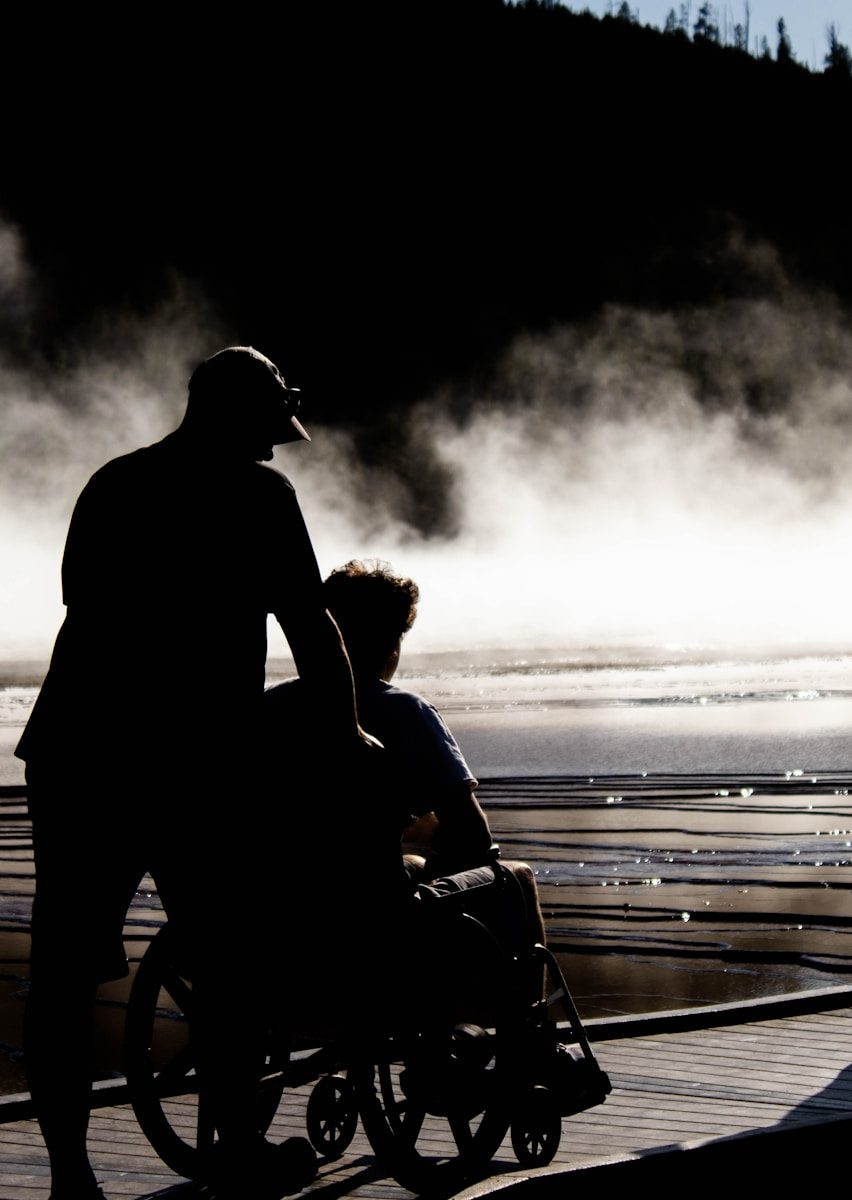
When we hear the word “accessible,” it is easy to immediately think of someone using a wheelchair. Mobility limitations, however, cover a much wider range.
Someone may use a walker or cane. Another person may be able to walk short distances but have difficulty with stairs or uneven ground. Others may need a wheelchair or mobility scooter full time. Vision or hearing limitations can create entirely different challenges.
Even temporary conditions can change the way someone travels. An injury or recovery from surgery can suddenly make steps, gravel, steep grades, or a long walk to the bathhouse much more important than they were before.
That means there really isn’t a single definition of the perfect accessible campsite. What works well for one person may not work at all for another.
Accessible Campgrounds Are Out There
Many public campgrounds have campsites specifically designed for people with mobility limitations.
Federal accessibility standards address camping areas and include requirements for accessible routes, firm and stable surfaces, accessible outdoor features, and adequate space around RV parking areas.
National and state parks are among the places where designated accessible campsites can be found. County, municipal, and privately operated campgrounds may offer them as well.
But there is an important distinction:
An accessible campsite does not necessarily mean an accessible campground.
You could have a beautiful level concrete campsite and still discover that the route to the camp store is gravel, the fishing pier has steps, the pool isn’t accessible, or the bathroom is farther away than you can comfortably travel.
That makes some advance research especially important.
Don’t Rely on the Accessibility Symbol Alone
If accessibility is important to your trip, I would contact the campground directly before making a reservation.
Rather than simply asking, “Do you have accessible sites?” ask questions specific to your needs.
Things worth checking include:
- Is the campsite concrete, asphalt, gravel, grass, or dirt?
- Is the site reasonably level?
- Is there enough room beside the RV for a wheelchair lift or ramp?
- Is there a step-free route to the restroom and shower?
- Are the restroom and shower actually wheelchair accessible?
- Are the campground office, store, laundry, and recreational facilities accessible?
- Are pathways paved, gravel, or grass?
- Is accessible parking available at other facilities within the campground?
- Are there steep grades that could cause problems for someone using a wheelchair, walker, or mobility scooter?
Campground photographs, satellite views, and reviews can help, but if accessibility could determine whether the campground works for you, I would still make the phone call.
RVs Designed for Accessibility
The RV itself presents another challenge.
Think about a typical RV. The entrance usually has several steps. Interior hallways can be narrow. Bathrooms are small. Controls and cabinets may be difficult to reach from a wheelchair. Even moving from one end of an RV to another can be difficult.
Some manufacturers have addressed those problems.
There are RVs available with accessibility features such as wheelchair lifts, wider entry doors and interior aisles, wheelchair securement systems, lowered countertops and controls, grab bars, and more accessible bathrooms.
One example is Winnebago’s accessibility-enhanced RV line. There are also specialty manufacturers and conversion companies that can build or modify RVs around an individual’s particular needs.
These aren’t simply conventional RVs with a grab bar added. In some cases, accessibility affects the entire design of the RV.
Modifying an Existing RV
Buying a purpose-built accessible RV isn’t the only option.
Depending upon someone’s needs and the RV involved, modifications to an existing unit may be possible.
Something as simple as adding a better handrail or grab handle can make a considerable difference for someone who can climb the steps but needs additional stability. Other situations might require powered steps, a wheelchair lift, a ramp, or substantial interior modifications.
There is an important caution here. Adding a wheelchair lift or making major structural changes to an RV isn’t a casual do-it-yourself project. Weight ratings, frame strength, electrical requirements, weight distribution, and emergency exits all have to be considered.
For major accessibility modifications, this is one area where I would want someone who understands both RV construction and accessibility equipment involved.
The Campsite Is Only Part of the Trip
There is another part of accessible RV travel that can easily be overlooked: everything between the campgrounds.
Fuel stops, restaurants, attractions, rest areas, hiking trails, visitor centers, and scenic overlooks all become part of the accessibility equation.
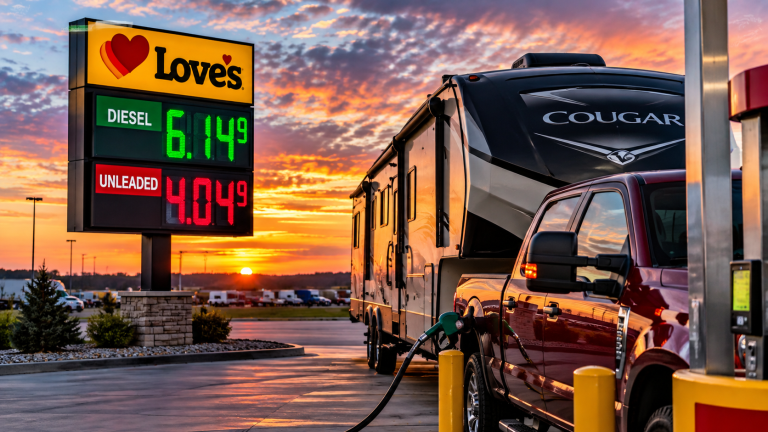
Even something as routine as fueling a large diesel truck can become more complicated when mobility is limited.
When planning a trip, it may make sense to look beyond simply finding an accessible campsite. Where will you stop along the route? Can you get into the attractions you want to visit? Are accessible transportation options available once you arrive?
Doing a little more planning ahead of time can prevent a lot of frustration later.
Accessibility Can Matter to Any of Us
It can be easy to think of accessible camping as something that applies to somebody else.
The reality is that many RVers are getting older. Knees and hips don’t always cooperate like they once did. Accidents happen. Medical problems occur. A person who easily climbed three RV steps yesterday may suddenly find those same steps difficult.
For someone with a permanent disability, those considerations are simply part of everyday life.
But physical limitations don’t necessarily mean giving up RV travel. They may mean changing how you travel, choosing campgrounds more carefully, modifying an RV, or eventually choosing an RV designed around different physical needs.
The encouraging part is that there are more options available than many people realize.
A Little Research Goes a Long Way
If there is one recurring lesson in RV travel, it is that planning matters. Accessibility is no exception.
Don’t assume that a campground marked accessible will meet your particular needs. Ask questions. Look at photographs. Read reviews from other travelers with mobility limitations. Call the campground when necessary.
And if physical limitations are making a conventional RV difficult to use, don’t automatically assume that RVing is over. Accessible RVs and modifications exist that may make traveling possible again.
The whole point of RVing is having the freedom to get out and see the country.
A disability may change how someone does that, but it doesn’t necessarily have to determine whether they can do it.
Enjoy Rick's Ramblings?
If you found this post helpful or interesting, subscribe to receive an email when new posts are published.