Free and Low-Cost Overnight RV Camping: It’s Out There If You Look
When we’re traveling, it’s common to come across things that inspire me to write about. When we’re home between trips, I often get ideas from what I’m seeing on RV social media and the groups I follow.
Lately, I’ve been seeing a lot of questions and comments about free camping. One post even claimed there are free campsites in all 50 states.
Since we like to travel, I thought it would be handy to put together a state-by-state list of free campgrounds that RVers could use when planning a route. I started researching it and quickly discovered that the idea sounded a lot easier than it actually was.
Free and low-cost overnight RV camping is definitely out there.
Finding it, confirming it and determining whether it works for your particular RV is another story.
Free Camping Takes Some Work
There are communities around the country that provide free or very inexpensive RV camping, particularly small towns in the Midwest and Great Plains.
Some municipalities provide a city park or designated RV area where travelers can stay for a night or two at no charge. Others ask for a donation or provide the first night free and charge for additional nights.
Why would a community do this?
They want you to stop.
You may not pay for your campsite, but you’ll probably buy fuel, groceries or dinner while you’re there. You might visit a local business or attraction. Providing RV travelers with a place to stay can bring money into a small community.
Some locations offer nothing more than a place to park. Others provide electricity, water and occasionally even a dump station.
The problem is that these arrangements change.
A location listed as free a couple of years ago may now charge. A city may change the maximum stay. Hookups may no longer be available. Some locations are seasonal, and others require you to register with city hall or the local police department.
That’s one reason I decided against trying to maintain a nationwide list.
The information would be outdated almost as soon as I published it.
Finding Them
If you’re willing to spend some time researching, there are free and inexpensive places to stay.
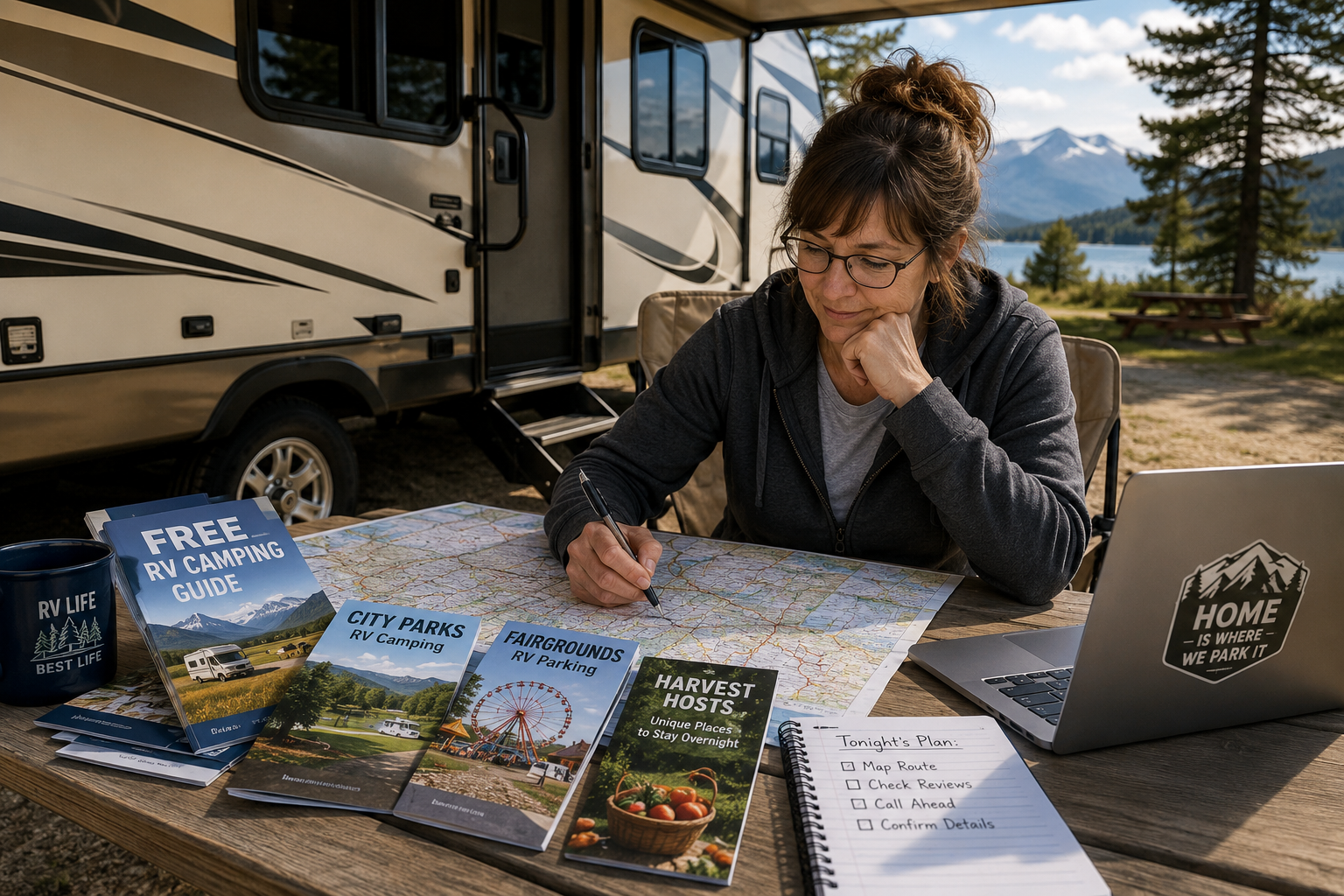
When planning a route, try searching for:
- Free RV camping
- Municipal RV park
- City park RV camping
- Free city campground
- County park camping
- Fairgrounds RV camping
- First night free RV campground
Add the name of the town or area where you’re planning to stop.
RV apps, campground websites and recommendations from other RVers can help identify possibilities. But once you find one, don’t stop there.
Verify it.
Look for an official city, county or campground website. Check the dates on reviews. Look at satellite images if you’re concerned about access or whether your rig will fit.
If you’re still unsure, make a phone call.
A five-minute call is much better than arriving at 7:00 at night and discovering the free campground you were counting on no longer exists.
Free Doesn’t Automatically Mean It’s a Good Place to Stay
There’s another side of free camping that doesn’t get discussed as often: security.
Just because you’re allowed to stay somewhere doesn’t necessarily mean you’ll be comfortable staying there.
Some free camping and overnight parking locations can attract people who are there for reasons other than traveling. That doesn’t automatically make the location unsafe, but it’s something to consider.
Pay attention to your surroundings.
Read recent reviews. Look at the neighborhood and the condition of the property. If you arrive and something doesn’t feel right, leave.
Saving $40 or $50 isn’t worth spending the night somewhere you’re uncomfortable.
This is also another reason I wouldn’t plan an entire trip around free camping. I want alternatives available in case we arrive somewhere and decide we’d rather move on.
Harvest Hosts Belongs in the Conversation
Another option worth considering is Harvest Hosts.
Harvest Hosts isn’t technically free camping because you pay an annual membership fee. But once you’re a member, your first night’s stay at participating locations doesn’t have a traditional camping fee.
As of 2026, the regular annual membership options are:
- Harvest Hosts Classic — $99 per year
- Harvest Hosts + Boondockers Welcome — $169 per year
- Harvest Hosts All Access — $179 per year
The different memberships provide access to varying combinations of farms, wineries, breweries, attractions, private-property hosts, golf courses and other locations.
Harvest Hosts recommends that members spend at least $30 with the host for a one-night stay. That might mean buying produce from a farm, having dinner, purchasing something from a winery or brewery, buying admission to an attraction or otherwise supporting the business.
Most Harvest Hosts stays should be considered boondocking. Don’t assume you’ll have water, sewer or electricity. Some hosts offer hookups or additional nights for an extra charge.
For us, this type of stop can make sense on a travel day. We don’t necessarily need a swimming pool, laundry room or full hookups when we’re arriving in the evening and leaving the next morning.
I also like the idea that instead of paying $50 or $60 for campground amenities we’re not going to use, some of that money can go to a farmer, small business or local attraction.
You may also end up discovering someplace you never would have visited otherwise.
Other Overnight Options
Depending on where you’re traveling, you may also find overnight opportunities at fairgrounds, casinos and businesses that allow RV parking.
Again, do your research and ask permission.
Don’t assume that because someone stayed overnight at a particular business last year that you can do the same today. Local ordinances, property owners and individual managers can all change the rules.
Also remember that overnight parking and camping aren’t necessarily the same thing.
If a business allows you to spend the night in its parking lot, don’t automatically put out the chairs, grill and other camping equipment. You’re a guest on someone else’s property.
Is It Worth the Effort?
That really depends on how you travel.
If you have plenty of time to research your route, finding free or inexpensive overnight stops can save some money. On a long trip with several travel days, those savings can add up.
But there is a cost involved that doesn’t show up in your campground budget: your time.
Finding these locations, checking reviews, confirming the rules and making sure they’ll accommodate your RV takes some effort.
For us, I look at free and low-cost camping as another tool in the RV travel toolbox rather than something we would build an entire trip around.
If there’s a free municipal campground along the route we’re already traveling, we’ll consider it. If there’s an interesting Harvest Hosts location, that’s another possibility. If neither works, we’ll find a campground and pay for the night.
The goal isn’t necessarily to travel without spending money.
It’s to spend our travel money where it gives us the most value.
Free and low-cost RV camping is out there if you’re willing to look for it.
Just make sure you know what you’re getting before you pull in for the night.
Always verify before you go. Rules, fees, stay limits and availability can change. Check directly with the city, campground, business or organization before making an overnight stop part of your travel plans.
Safe Travels
Enjoy Rick's Ramblings?
If you found this post helpful or interesting, subscribe to receive an email when new posts are published.