
Diesel Prices Are Coming Down, But There’s a New Twist
I have written several times recently about the rapid increase in diesel prices and what it means for those of us who travel with diesel trucks and RVs. There was enough new information this week that rather than continue adding updates to an older post, I thought it was worth starting fresh.
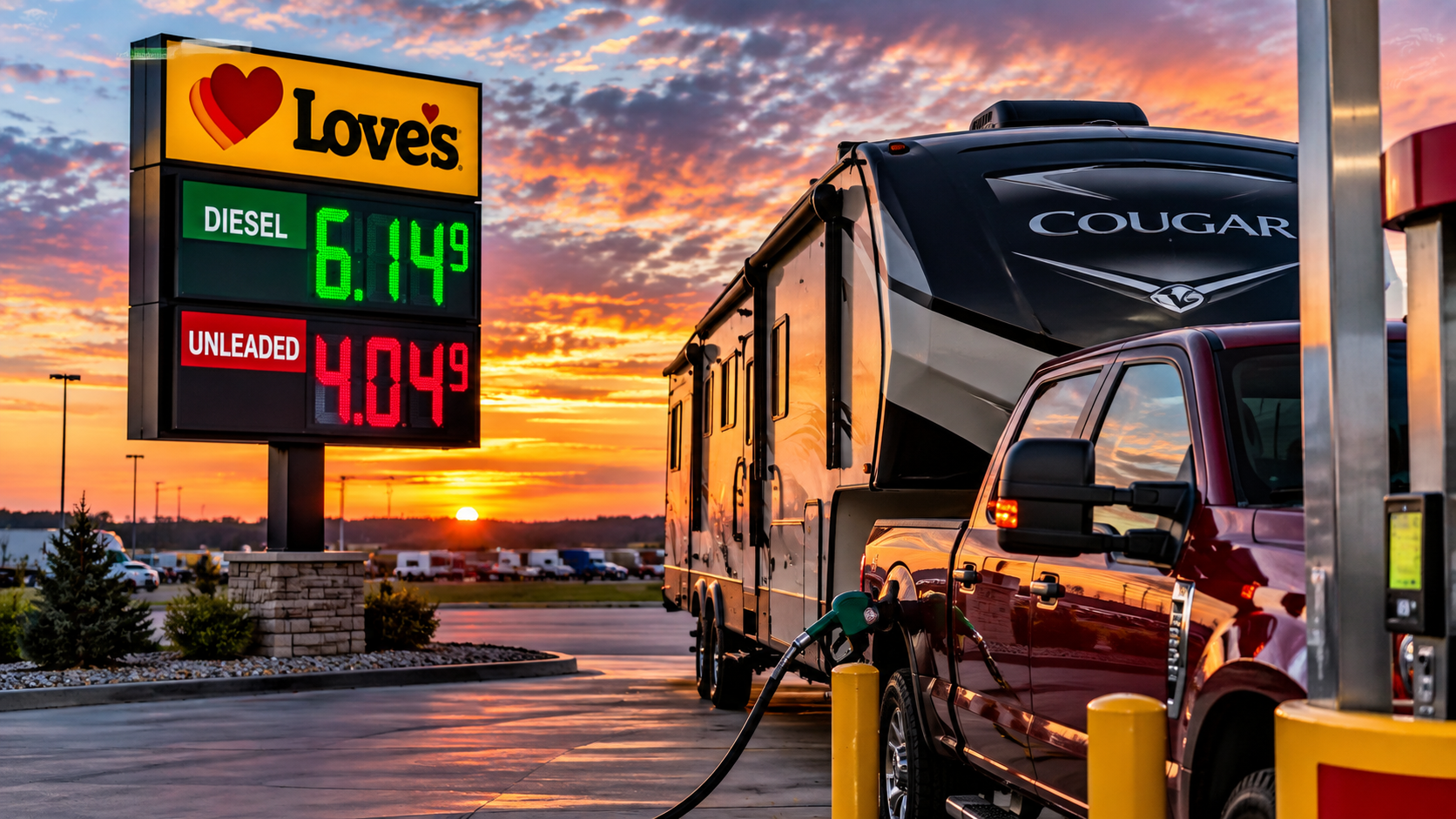
There is finally a little good news at the pump. According to the U.S. Energy Information Administration, the national average price for on-highway diesel was $6.199 per gallon for the week of October 5. That is still painfully high, but it is down about 18 cents from $6.382 the previous week. Here in the Midwest, the average was $6.286, down from $6.526 the week before. U.S. Energy Information Administration
That is certainly movement in the right direction, but diesel remains more than twice what it was a year ago nationally. For RVers pulling large trailers with diesel pickups, even a modest trip can still carry a significant fuel bill.
Red-Dyed Diesel Can Temporarily Be Used on the Highway
The bigger news came on October 5, when President Trump signed an executive order temporarily relaxing the restrictions on red-dyed diesel fuel.
Normally, red-dyed diesel is intended for off-road uses such as farming and construction equipment. Because it isn’t normally used on public highways, it isn’t subject to the same federal highway fuel tax.
The executive order directs the Treasury Department to provide relief allowing dyed diesel to be used on highways from October 5 through December 31, 2026, without the normal penalties associated with highway use of dyed fuel. It also directs Treasury to consider deferring the applicable federal excise tax during that period. The White House
The federal diesel excise tax is 24.4 cents per gallon, so potentially there is some meaningful savings involved. The White House
But there is an important catch.
The executive order does not simply erase the tax. It directs Treasury to determine what taxes can legally be deferred and to issue implementing guidance. The order specifically says Treasury is to explore ways, including legislation, to ultimately eliminate the obligation to pay those deferred taxes. The White House
In other words, I would not run out looking for red diesel for the truck just yet.
There are also state fuel taxes and regulations to consider. Some states are taking similar action, while others may not. And there is the practical question of availability. Red-dyed diesel isn’t something most of us normally find alongside regular highway diesel at the truck stop. Industry analysts are already questioning how broadly this change will actually benefit ordinary diesel drivers because of those logistical and regulatory issues. MarketWatch
This Doesn’t Solve the Diesel Supply Problem
This is probably the most important part of the story.
Changing the tax treatment of diesel can reduce what someone pays for a gallon, but it doesn’t create another gallon of diesel.
The Energy Information Administration continues to forecast tight distillate supplies. It expects East Coast distillate inventories to remain 20% to 30% below the five-year average through the upcoming winter, with global inventories also remaining low. U.S. Energy Information Administration
So while allowing highway use of dyed diesel may provide some temporary relief, it doesn’t change the underlying supply situation that helped push prices this high in the first place.
What Does This Mean for RVers?
For now, my approach isn’t changing much.
Diesel has finally started moving downward, which is encouraging. But at more than $6 per gallon nationally, it is still expensive enough to have a major impact on RV travel costs.
The red-dyed diesel announcement is interesting, but I wouldn’t count on saving 24 cents a gallon until Treasury and the states finish spelling out exactly how this is going to work and we know whether the fuel will actually be accessible to ordinary RV owners.
For those of us planning trips, the things we can control remain the same: watch fuel prices along the route, use discount programs such as Open Roads and Mudflap when they provide a better price, and include realistic fuel costs when deciding how far we want to travel.
For the moment, I’ll take an 18-cent national drop in a week as good news.
I just wouldn’t call the diesel problem solved.
Enjoy Rick's Ramblings?
If you found this post helpful or interesting, subscribe to receive an email when new posts are published.