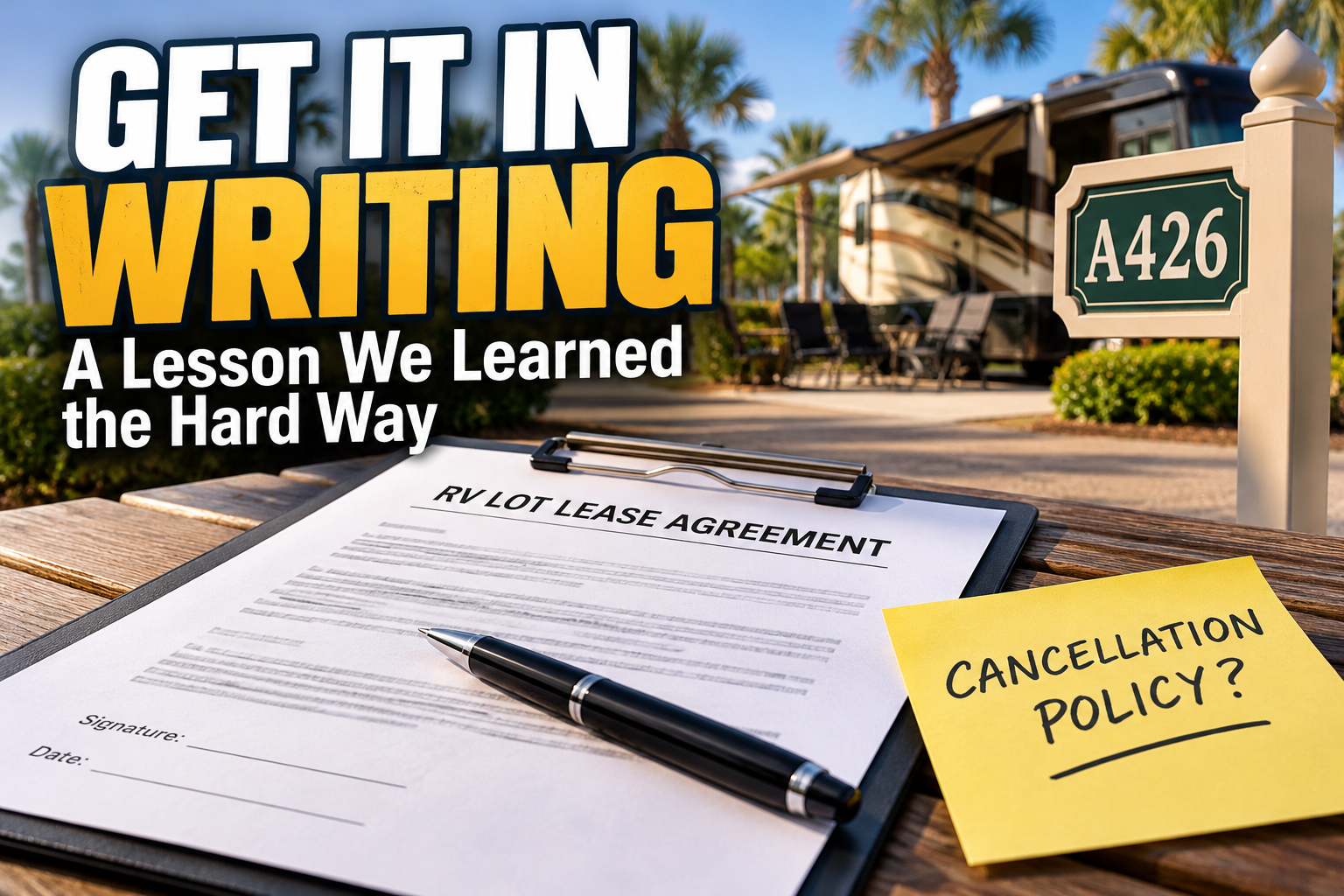
Get It in Writing: A Lesson We Learned the Hard Way
One of the things we’ve enjoyed about RVing is the people we’ve met along the way. For the most part, we’ve found the RV community to be made up of honest, trustworthy people who are willing to help one another. Unfortunately, every once in a while, something happens that reminds us that even in a community like ours, it’s important to protect yourself.
If you’re considering renting or leasing an RV lot, make sure you get everything in writing, especially the cancellation and refund policies.
Last spring, we found an RV lot that we were interested in leasing for this coming winter. We contacted the owners, worked out the arrangements, signed a contract and paid a deposit.
While reviewing the contract, I noticed there was no cancellation clause. I specifically questioned the owners about it and was assured that if something happened and we needed to cancel, getting our deposit back wouldn’t be a problem.
We accepted their word and signed the agreement.
As it turned out, our plans changed, and we had to cancel. We notified the owners six months before the lease was scheduled to begin. Their initial response was that they would need to see if they could find another tenant and would get back to us.
We understood that they might have incurred some expenses and had no objection to those legitimate costs being deducted from our deposit. We certainly weren’t expecting them to lose money because our plans changed.
A couple of weeks ago, I reached out again, requesting the return of our deposit, minus any expenses they may have incurred. Unfortunately, we have yet to receive our deposit or even a response to that request.
Frankly, I’m disappointed in how this has been handled. I understand that circumstances change and that a cancellation can create an inconvenience for a property owner. But we gave them six months’ notice, and I would have expected them to honor the assurance they gave us or, at the very least, communicate with us.
Where We Went Wrong
Looking back, we were either too trusting or just plain dumb for accepting a verbal assurance instead of insisting that the cancellation terms be included in the contract.
I knew the clause was missing. I questioned it. And then I accepted their word rather than having the contract amended. That was our mistake.
The fact is, a verbal assurance doesn’t provide the same protection as a clearly written agreement. When there’s a disagreement later, what matters most is what the parties actually agreed to in writing.
While the owners may be within their legal rights to keep our deposit, whether it’s the right thing to do is another story. I’ve always believed there’s a difference between what someone is legally entitled to do and how they should treat people, particularly when they’ve given their word.
A Few Things to Consider Before Signing
If you’re planning to rent or lease an RV lot, whether for a weekend, a month or an entire season, take the time to review the agreement carefully.
- Cancellation policy: What happens if you need to cancel, and how much advance notice is required?
- Deposit refunds: Is the deposit refundable, partially refundable or nonrefundable? Under what circumstances?
- Unexpected circumstances: What happens if illness, a family emergency or another unexpected situation forces you to change your plans?
- Additional expenses: Can the owner deduct expenses from your deposit, and how are those expenses determined?
- Verbal promises: If the owner makes an assurance that isn’t in the contract, ask to have it added before signing.
And don’t be afraid to ask questions. If something isn’t clear, get clarification in writing before handing over your money.
The Bottom Line
I’m not sharing this story to identify or publicly criticize the people involved. I’m sharing it because we made a mistake, and perhaps someone else can learn from it.
I still believe the overwhelming majority of people in the RV community are honest and trustworthy. This experience hasn’t changed that opinion. But it has reminded me that trust and a good written agreement should go hand in hand.
We learned our lesson, and hopefully our experience will help someone else avoid making the same mistake.
Get it in writing. Even when you’re dealing with people you believe you can trust.
Enjoy Rick's Ramblings?
If you found this post helpful or interesting, subscribe to receive an email when new posts are published.