RV Tank Sensors: We Quit Worrying and Found a Routine
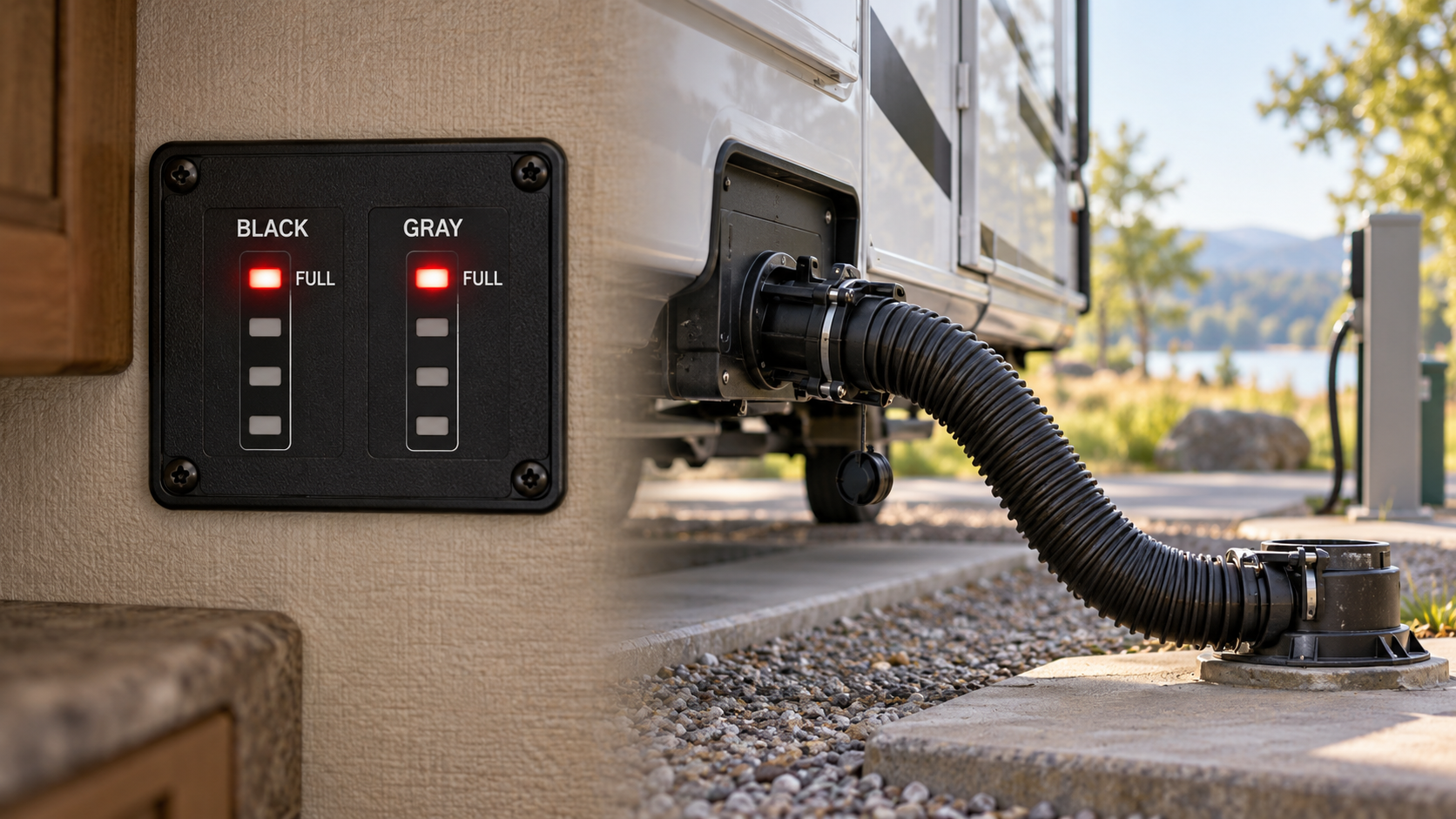
When we purchased our RV, it came with tank sensors and a control panel showing how much was in each tank. I liked the idea. After just a couple of trips, though, I realized the readings were no longer reliable. I would empty the tanks at the end of a trip, but the indicators would still show waste in them.
A little research helped explain why. Waste, toilet paper and sludge can build up on the internal black tank sensors, causing false readings. Grey tank sensors can have similar problems from soap residue, grease and other buildup. The fresh water tank doesn’t have the same waste buildup issues so it remains pretty accurate. .
Shortly after buying our RV, I was fortunate to meet a man who had owned RVs for years. He became a great resource for the questions we had about our new rig.
When I asked about the tank sensors, he asked whether I was the obsessive-compulsive type. I told him I was not.
“Then ignore the sensors,” he said. “Establish a routine, and the sensors be damned.”
For us, that turned out to be useful advice.
Cleaning or Replacing the Sensors
Keeping internal sensors clean enough to give consistently accurate readings can be frustrating. I have read accounts of people pouring 40 pounds of ice into their black tanks and driving around, hoping the ice will scrub the buildup off the sides of the tanks. Some swear by it and others say it’s a waste of time.
There are also products marketed specifically for cleaning tanks and restoring sensor readings. Results vary. Current examples cost about $12 per sensor-cleaning treatment or $20 for a deep-cleaning treatment. These are different from the routine tank treatments used to help manage odors and waste, which generally cost much less per dose.
Another option is an external monitoring system, such as SeeLeveL. Its sensors attach to the outside of the tanks and measure the level through the tank walls. A basic system can cost roughly $250 to $400 in parts if you install it yourself. Professional installation can bring the total to around $600 to $1,200, depending on the system and the work involved.
Access to the tanks can make installation difficult, especially with an enclosed underbelly. External sensors avoid having sensors exposed directly to the tank contents, but they do not eliminate the need for tank maintenance. Heavy buildup on the inside walls can eventually interfere with their readings, too.
The Routine That Works for Us
We chose to stop relying on the sensors and establish a dumping routine.
On our three or four day weekend trips, we empty the tanks before heading home. There is no reason for us to carry that extra wastewater weight when a dump station is available.
On longer trips, we generally empty the tanks every five days. For a seven day stay, I usually dump on the third day and again before we leave. That gives us a little more time to accumulate water before the final dump.
Having enough water in the black tank matters. The volume and flow help carry solids out as it drains. Dumping a nearly empty black tank may leave more waste behind.
Our schedule works for the two of us, with our tank capacities and normal water use. It is not a timetable that will fit every RV or family. More people, smaller tanks or heavier shower and sink use can mean dumping sooner. A routine needs to reflect how you actually use your RV.
We still maintain and rinse our tanks, we use Happy Camper Treatment everytime we dump the tanks. We have never had any odor problems or a build up in the tank. We simply do not spend our camping time trying to make every light on the control panel read correctly.
Once we learned how quickly our tanks filled under normal use, worrying about those indicators became one less thing on our list.
My Recommendation
If your tank sensors give unreliable readings, do not let them become a constant source of frustration. Cleaning may help, and an external monitoring system may be worth the expense if accurate readings are important to you.
For us, the factory sensors have not been dependable enough to guide our dumping decisions. A routine based on experience has worked well.
Get to know your tank capacities, pay attention to your water use and establish a schedule with some breathing room. Adjust it when your usage changes.
Camping is supposed to help you relax. A tank indicator that still says “full” after you have emptied the tank should not ruin your day.
Enjoy Rick's Ramblings?
If you found this post helpful or interesting, subscribe to receive an email when new posts are published.