Monitor Your Electrical Equipment and Usage
RV Power: A Little Attention Can Prevent a Big Problem
Let’s face it, one of the reasons we enjoy RVing is the comfort. Unlike tent camping, we have air conditioning, heat, refrigerators, microwaves, televisions, and all the other conveniences of home.
All of those comforts require electricity.
As RVs become larger and more sophisticated, so does their demand for power. While most of us don’t worry about the cost of electricity because it’s included in our campsite fee, we should pay attention to how much power we’re using—and more importantly, how safely we’re using it.
Doing so can help prevent expensive repairs and, in the worst-case scenario, an electrical fire.
Know Your Available Power
Most campgrounds provide one of three electrical services:
- 20 amp
- 30 amp
- 50 amp
The amount of power available determines how many appliances you can safely operate at one time.
Before you start turning everything on, take a moment to know what service your campsite provides and plan your power usage accordingly.
Use a Quality Surge Protector
Few RV topics generate more debate than surge protectors.
Some RVers believe they’re unnecessary. Others, including us, won’t plug into shore power without one.
We fall firmly into the second group.
Considering what we’ve invested in our fifth wheel and the amount of sensitive electronics it contains, I have no interest in connecting to a power pedestal that may have improper wiring, poor grounding, low voltage, high voltage, or dangerous power surges.
Our surge protector cost around $400, and I consider it cheap insurance.
One important point, however, is that a surge protector only protects you from problems at the campground pedestal. It cannot protect you from loose, damaged, or overheated connections farther down the line in your own power cord or RV.
That’s why regular inspections are just as important.
Proper Setup Matters
When we arrive at a campsite, I always turn off the campground breaker before plugging anything in. This helps prevent arcing when making the connection.
I connect the surge protector first and allow it to test the pedestal.
It verifies that the outlet is wired correctly, properly grounded, and supplying acceptable voltage.
Once everything checks out, I connect the RV power cord and turn the breaker back on. The surge protector performs one final check before allowing power into the RV.
It only takes a minute, but it’s time well spent.
Heat Is Your Enemy
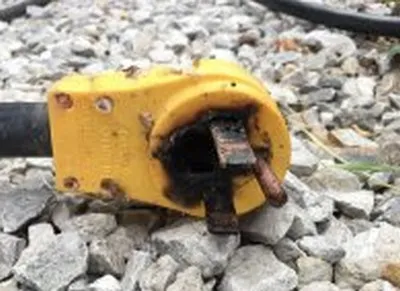
One of the most common electrical problems discussed in RV forums is a burned or melted power plug.
People often ask, “What caused this?”
In most cases, the answer is a combination of high electrical demand and a poor electrical connection.
Electricity flowing through a loose or damaged connection creates resistance.
Resistance creates heat.
Enough heat can discolor the plug, melt the plastic, damage the receptacle, or even start a fire.
The important thing to remember is that this can happen even if you’re not drawing the full 30 or 50 amps. A loose connection can overheat at much lower loads.
Check Your Connections
About an hour after we’re completely set up, I go outside and check every electrical connection.
I simply place my hand on the plug and cord ends.
It’s normal for them to feel slightly warm.
They should never be too hot to comfortably touch.
If they’re unusually hot, I start looking for the cause.
Maybe both air conditioners are running.
Perhaps the electric water heater, microwave, hair dryer, coffee maker, and television are all operating at the same time.
Sometimes it’s simply a matter of reducing the electrical load until the connections cool down.
I also make it a habit to check the plugs at least once each day.
People walk by campsites all the time. Someone may accidentally kick or tug your power cord without realizing it, loosening the connection enough to create a problem.
Watch for Warning Signs
Electrical problems often give you warning before they become serious.
Pay attention if you notice:
- Flickering lights
- Air conditioners slowing down or sounding different
- Low voltage warnings from your surge protector
- Breakers tripping repeatedly
- A burning smell or discolored plugs
- Warm or hot power cords
If something doesn’t seem right, investigate it immediately.
It’s also a good idea to periodically check the screws in your RV’s breaker panel and electrical connections. Road vibration can loosen connections over time, even though manufacturers take steps to prevent it.
Final Thoughts
A surge protector is one of the best investments you can make, but remember what it does—and what it doesn’t do.
It protects your RV from problems coming from the campground power pedestal.
It cannot protect you from loose, damaged, or overheated plugs, worn cords, or faulty wiring inside your RV.
If you ever notice discoloration, melted plastic, excessive heat, or signs of arcing on any electrical connection, don’t ignore it. Repair or replace the damaged parts before your next trip.
A few minutes spent checking your electrical system can prevent a ruined vacation—or something much worse.
Enjoy Rick's Ramblings?
If you found this post helpful or interesting, subscribe to receive an email when new posts are published.