RV Tires and Monitors
Your Tires Are the Only Thing Between You and the Road
One of the most common topics discussed in RV groups is tires. It’s almost impossible to spend much time around RV owners without hearing the term “China Bombs.” The nickname refers to the inexpensive trailer tires commonly installed on many new RVs. While not every tire manufactured in China is poor quality, enough failures have occurred over the years that the term has become part of RV vocabulary.
A friend of mine learned this lesson the hard way. On the very first day of a trip in his brand-new fifth wheel, one tire blew out. The resulting damage caused the second tire on the same side to fail as well. The tire failures caused extensive damage to the RV, and it took more than six weeks to complete the repairs. Not exactly the way you want to begin ownership of a new RV.
Know Your Tires
One of the first things every RV owner should do is inspect the information molded into the sidewall of each tire. That information tells you almost everything you need to know.
Tire Size
You’ll need the tire size whenever it’s time to replace your tires. Write it down or take a picture of it.
Load Range
The load range indicates the maximum weight the tire is designed to carry. Many RV manufacturers install tires that are very close to their maximum load rating before you even load your first pillow into the trailer. That’s one reason many experienced RV owners eventually upgrade their tires.
Speed Rating
Every tire has a maximum speed rating.
I can’t believe how many fifth wheels and large travel trailers fly past us at over 70 mph on the interstate. Our tires are rated for 80 mph, but I have no desire to tow our fifth wheel anywhere near that speed. Besides increasing stopping distance, higher speeds generate more heat, and heat is one of a tire’s biggest enemies.
Date of Manufacture
This is one of the most important numbers on the tire.
RV tires age whether you drive them or not. Sunlight, weather, and time all contribute to tire deterioration.
Most manufacturers recommend replacing RV tires after about seven years from the date they were manufactured, not from the day you purchased the RV.
It’s entirely possible to buy a brand-new RV that’s been sitting on a dealer’s lot for several years, meaning the tires are already well into their lifespan. Always check the date code before you buy.
Maximum Inflation Pressure
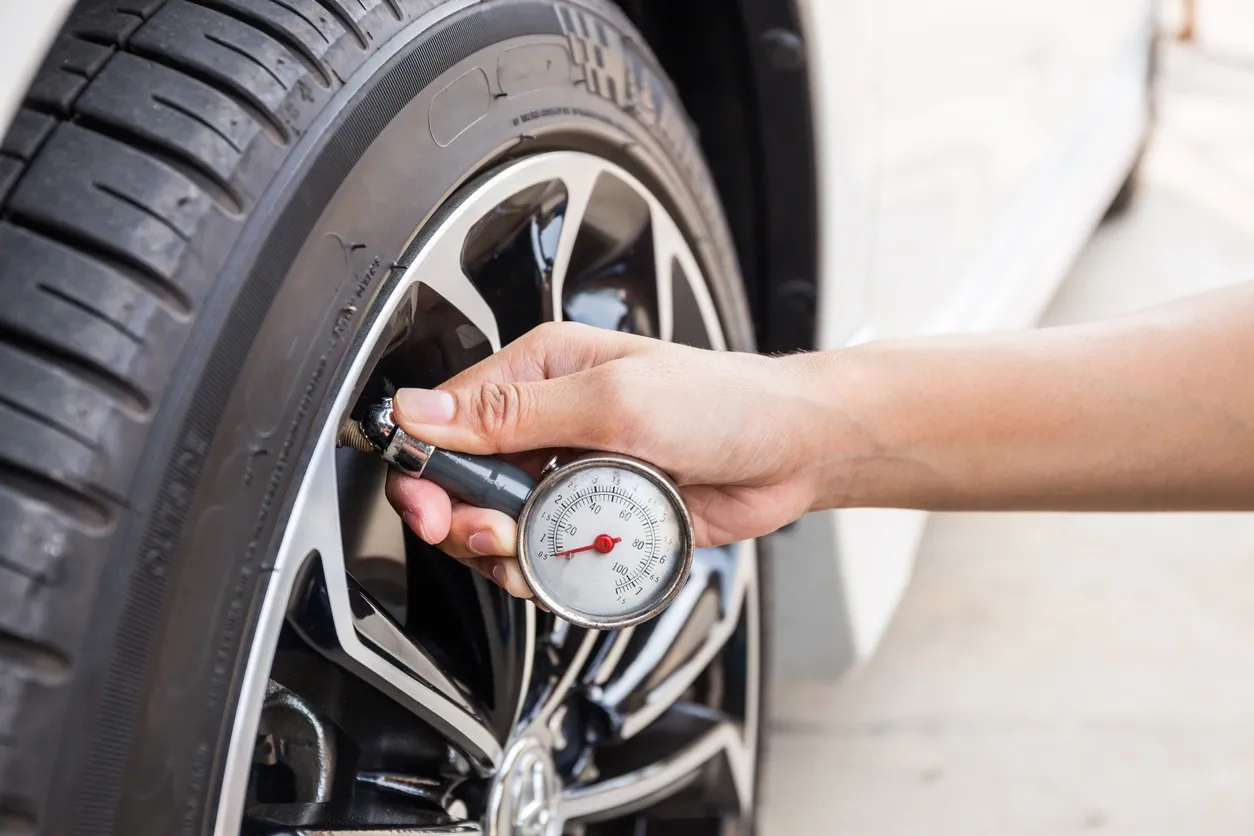
Know the recommended cold tire pressure for your RV and check it before every trip.
Many inexpensive tire gauges are designed for passenger vehicles and don’t accurately measure the higher pressures commonly found on trucks and RVs. Our truck and fifth wheel both require 80 PSI when cold, so I purchased a quality gauge designed for higher pressures.
Remember that temperature and elevation changes will affect tire pressure during your travels.
Do a Walk Around Every Time You Stop
Whenever you stop for fuel, lunch, or a rest break, get into the habit of walking around your RV.
Look at every tire.
Does one look low?
Is anything hanging loose?
Place your hand near each wheel. If one hub feels significantly hotter than the others, it could indicate a failing wheel bearing or a dragging brake. Catching a problem early can save you from a much bigger repair later.
Use the Internet
One of the easiest things you can do is take pictures of all the information printed on your tires.
Later, search the tire model online. You’ll find the load rating, speed rating, age, manufacturer specifications, and often reviews from other RV owners.
Hopefully, there won’t be any surprises.
Tire Pressure Monitoring Systems (TPMS)
As I prepared for our first long trip, I kept reading stories from RV owners who developed slow leaks while driving. By the time they noticed something was wrong, the tire had already failed and damaged the RV.
One of the best ways to protect both your safety and your investment is with a Tire Pressure Monitoring System (TPMS).
Frankly, I’m surprised the RV industry hasn’t been more proactive about making these systems standard equipment.
How They Work
A TPMS uses sensors attached to each tire valve stem to continuously monitor tire pressure and temperature.
The information is sent by Bluetooth or radio signal to a smartphone app, a dedicated in-cab monitor, or in some cases, directly to your tow vehicle’s display.
If a tire begins losing air or overheats, the system alerts you before the problem becomes a blowout.
That’s exactly the kind of warning you want if you pick up a nail and develop a slow leak.
Choosing a System
There are many excellent systems on the market, ranging from around $50 to several hundred dollars.
Do your homework before buying.
Features, displays, alert settings, and the number of tires supported vary considerably.
One important specification to pay attention to is communication range.
If the monitor only communicates reliably for 30 feet and your RV measures over 40 feet, you’re likely to experience intermittent signal loss.
A friend with a 34-foot toy hauler has exactly that problem and is now looking at adding a signal repeater.
Our Choice
We purchased the Lippert Tire Linc® Tire Pressure and Temperature Monitoring System for about $250 after applying a few discounts.
Installation was straightforward.
I mounted the repeater in our front storage compartment near the auto-level controller. Rather than tapping into an existing fused circuit, I connected it directly to the battery and added a small switch so I could shut it off while the RV is in storage to prevent unnecessary battery drain.
The mobile app was easy to set up, and within minutes I was receiving tire pressure and temperature readings from every tire.
The only issue I encountered involved the repeater’s status light.
When power is first applied, a red light comes on, blinks briefly, and then turns off. At first, I assumed the repeater had lost power because there was no indicator showing it was operating.
After contacting Lippert customer support, I learned that the repeater was functioning normally. The status light is only intended for pairing the sensors. Once pairing is complete, the light goes out even though the repeater remains powered and fully operational.
Personally, I think the design could be improved. A simple power indicator would eliminate any confusion.
Update: We Replaced Our Lippert TPMS
We ended up replacing our Lippert TPMS system. I was just never impressed with how consistently it worked.
In addition to the issues we had with the indicator lights, I never felt we were getting a reliable signal in the cab of the tow vehicle. The system would occasionally lose connection for no apparent reason while we were driving, and getting all of the sensors connected when starting out for the day could be time-consuming and inconsistent.
We eventually switched to the TST 507 Tire Pressure Monitoring System, and so far we’ve been very pleased with its performance. It runs between $350 – $400 on Amazon and other retailers.
Setup was easy, and with the signal repeater installed, the connection to the sensors has been consistent. Once we’re underway, we haven’t experienced any dropped signals, and so far we’ve had no problems with the system.
One Change I Made: Metal Valve Stems
When we installed the TST system, I also replaced the rubber valve stems on the trailer wheels with metal valve stems.
The sensors screw onto the valve stems, adding weight to the end of them. At highway speeds, that additional weight can cause a rubber valve stem to flex or wobble. Over time, that could contribute to a valve stem failure.
While that isn’t technically a tire blowout, a failed valve stem can cause rapid air loss and potentially destroy an otherwise perfectly good tire before you can get stopped.
Metal valve stems eliminate that concern. They are available in different lengths, so you can select ones that work with your wheels and any wheel covers you may have.
A Couple of Tips We’ve Learned
When we’re going to park the RV for an extended period, I remove the TST sensors from the valve stems. With no pressure detected, the sensors shut down, which helps preserve their batteries.
If you do this, make sure each sensor goes back onto the same tire it came from. The monitor associates each sensor with a particular tire position, so mixing them up means the display will be identifying the wrong tire.
There’s another battery consideration with the repeater itself.
Make sure your repeater loses power when you shut down your RV’s master battery switch. On our fifth wheel, the repeater is wired directly to the battery, so the master disconnect doesn’t shut it off. I installed an inline fuse that I can pull when the RV goes into storage. That prevents the repeater from slowly draining the RV battery while we’re not using it.
Overall, switching to the TST 507 has been a worthwhile change for us. A TPMS is something I want to be able to turn on at the beginning of a travel day and then forget about until it has something important to tell me.
So far, that’s exactly what the TST system has done.
Final Thoughts
Your tires carry thousands of pounds down the highway and are the only part of your RV that actually touches the road.
Inspect them regularly, keep them properly inflated, know how old they are, and consider investing in a quality TPMS.
Those few minutes of preparation before each trip could save you thousands of dollars in repairs and, more importantly, help keep you and your family safe on the road.
Enjoy Rick's Ramblings?
If you found this post helpful or interesting, subscribe to receive an email when new posts are published.