Rates and Availability
Planning the Journey
For most people, buying an RV means they plan to travel.
Sure, some RVs spend their lives on seasonal or permanent sites, but most of us bought ours to see new places.
Years ago, traveling was a little more spontaneous. On travel days, you could decide a couple of hours before stopping to look for a place to spend the night. Whether it was a campground or an overnight boondocking spot, finding a place usually wasn’t difficult.
For the most part, those days have changed.
Overnight boondocking locations are becoming harder to find. More people are using them, and some businesses have stopped allowing overnight parking because a few campers left a mess or abused the privilege.
We Like to Plan Ahead
Pat and I prefer knowing where we’ll be spending the night.
When planning a trip, we first decide on the destination and then determine whether we want to spend time sightseeing along the way or simply get there.
On our trip to Florida last October, we had our overnight stops planned before we left home. We also built in a couple of extra days in Nashville so we could relax and visit family before continuing south.
That style of travel works well for us.
Choosing the Route
I spend a fair amount of time researching our routes before every major trip.
There are a lot of things to consider.
How much time do we have?
Are we towing the fifth wheel?
Do we want the fastest route or the most scenic one?
Are there places we’d like to stop and explore?
Once we’ve settled on the route, it’s time to find campgrounds along the way.
We’ve found that about 300 miles a day is comfortable for us.
It allows us to leave at a reasonable hour, arrive before dinner, and still have time to relax and enjoy the evening.
Campground Websites
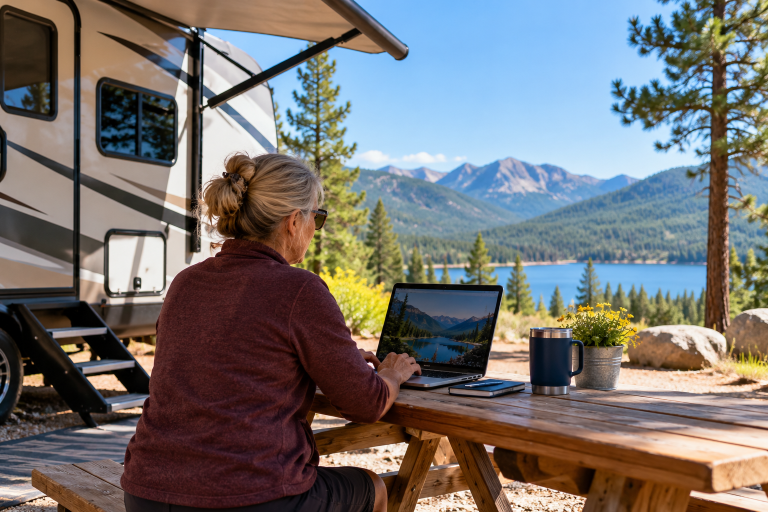
This is where trip planning can sometimes become a little frustrating.
When I’m looking at a campground, the first things I want to know are the rates, the types of sites available, and whether they have openings. After that, I look at the amenities.
Most campground search apps eventually direct you to the campground’s own website.
I’m always grateful when that information is current.
Every once in a while, though, I’ll find a website with rates or information that haven’t been updated for several years. It doesn’t stop me from considering the campground, but it usually means I’ll have to make a phone call to confirm the current information.
Honestly, I don’t mind making that call. Sometimes it’s the quickest way to get the answers I need.
Everyone Travels Differently
I know plenty of RVers who prefer to head down the road with no reservations and simply stop when they’ve had enough for the day.
We’ve done that ourselves from time to time.
For longer trips, though, we’ve found that a little planning makes the journey more relaxing.
Having reservations doesn’t mean every minute of the trip is scheduled. It simply gives us a good starting point while still leaving room to change plans if we discover something interesting along the way.
Final Thoughts
Trip planning takes time.
Researching routes, comparing campgrounds, and making reservations isn’t the most exciting part of RVing, but we’ve found it’s worth the effort.
The less time we spend wondering where we’ll stay each night, the more time we have to enjoy the trip.
One Last Thought
There’s no right or wrong way to travel.
Some people enjoy planning every stop.
Others enjoy seeing where the road takes them.
For us, having a plan—and being willing to change it when needed—has made for some very enjoyable adventures.
Enjoy Rick's Ramblings?
If you found this post helpful or interesting, subscribe to receive an email when new posts are published.