Choosing the Best Route
One of the things I enjoy most about preparing for an RV trip is planning the route.
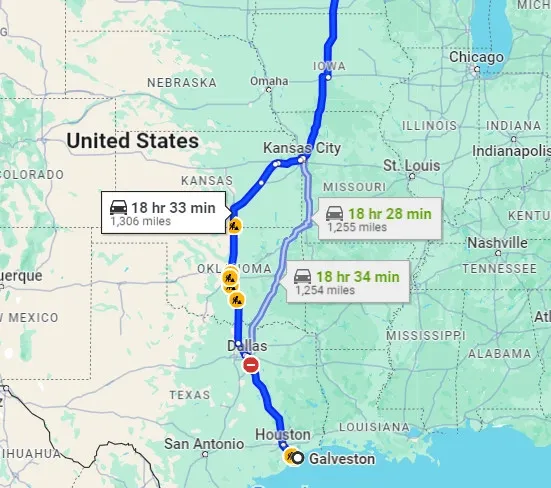
Over the years we’ve taken three longer trips with our fifth wheel: one to South Dakota, one to Florida, and our current trip to Galveston, Texas. By “longer trips,” I mean those that take more than a day to reach our destination.
Planning the route has become part of the adventure.
My years of taking long motorcycle trips probably explain why. Whenever possible, we preferred riding back roads instead of Interstates. They offered more scenery, less traffic, and plenty of interesting small towns to explore along the way.
RV travel changes that equation a little.
With our fifth wheel standing just over 13 feet 3 inches tall, low bridges and overhead clearances become an important part of every trip plan. Fortunately, today’s RV navigation tools make it much easier to identify potential hazards before you leave home.
Whenever possible, I still like to avoid the Interstate.
Driving secondary highways usually means a slower pace, more scenic views, and discovering local restaurants and attractions that you would never notice flying by at 70 miles an hour.
Sometimes the slower route really is the better route.
Our trip to Florida is a good example.
The trip was roughly 1,300 miles each way, yet we only spent about 200 miles on the Interstate. The rest of the journey was on U.S. highways and state roads. The roads were in excellent condition, and we even took a slightly different route home so we could see some places we had missed on the way south.
It turned out to be one of our favorite RV trips.
Our current trip to Galveston has been different.
This time we’ve used a combination of Interstate highways and U.S. highways. Unfortunately, one of the longer stretches on U.S. Highway 69 through Oklahoma and Texas was some of the roughest road we’ve traveled with the fifth wheel.
In several areas, the pavement was so rough that our comfortable cruising speed dropped to around 50 mph. Constant bouncing isn’t enjoyable for us, and I can’t imagine it’s very good for the truck or the trailer either.
That experience has already influenced our plans for the trip home.
Although I generally prefer the slower pace of secondary highways, this time we’ll be taking the Interstate.
It may not offer as much scenery, but smoother roads, a more comfortable ride, and making better time make it the right choice for this trip.
One thing I’ve learned is that there isn’t a single “best” route.
Sometimes it’s the scenic road.
Sometimes it’s the fastest road.
Sometimes it’s simply the one that’s in the best condition.
Good trip planning means keeping an open mind and choosing the route that best fits the journey you’re taking.
Enjoy Rick's Ramblings?
If you found this post helpful or interesting, subscribe to receive an email when new posts are published.