Tips for Visiting Yellowstone
We are about halfway through our Yellowstone and Grand Teton adventure, and we’ve learned a few things that may help others planning a visit.
Whether you’re traveling in an RV, staying in a lodge, or renting a cabin, these tips apply to just about everyone. Some came from experienced travelers before we left home, while others we learned firsthand during our time in the parks.
One thing is certain.
Be prepared to be amazed. The beauty of Yellowstone and Grand Teton is difficult to describe. Every turn in the road seems to reveal another incredible view.
Here are a few suggestions that helped make our trip even better.
Give Yourself Plenty of Time
The more time you have, the better.
You simply cannot see everything in two days. Even with careful planning, you’ll have to skip some attractions. Traffic, wildlife sightings, and the temptation to stop for photos all take time.
We spent a week here and felt it was about right. If your schedule is tight, I would recommend at least four full days.
Use a GPS Tour Guide App
One of the best decisions we made was purchasing the GuideAlong app.
Using your phone’s GPS, it automatically narrates the drive as you travel through the parks. It points out scenic overlooks, recommends where to park, explains the history of the area, and even suggests which stops are worth your time.
The narration is entertaining, informative, and lets you explore at your own pace rather than following a tour bus schedule.
For us, it was well worth the cost.
Carry Bear Spray
Hopefully you’ll never need it, but you should have it.
We saw fresh bear tracks almost every day, often in places where we weren’t expecting them.
Bear spray can be purchased or rented near the park. Whichever option you choose, make sure everyone in your group knows where it is and how to use it before you need it.
Be Patient
Traffic delays are part of the Yellowstone experience.
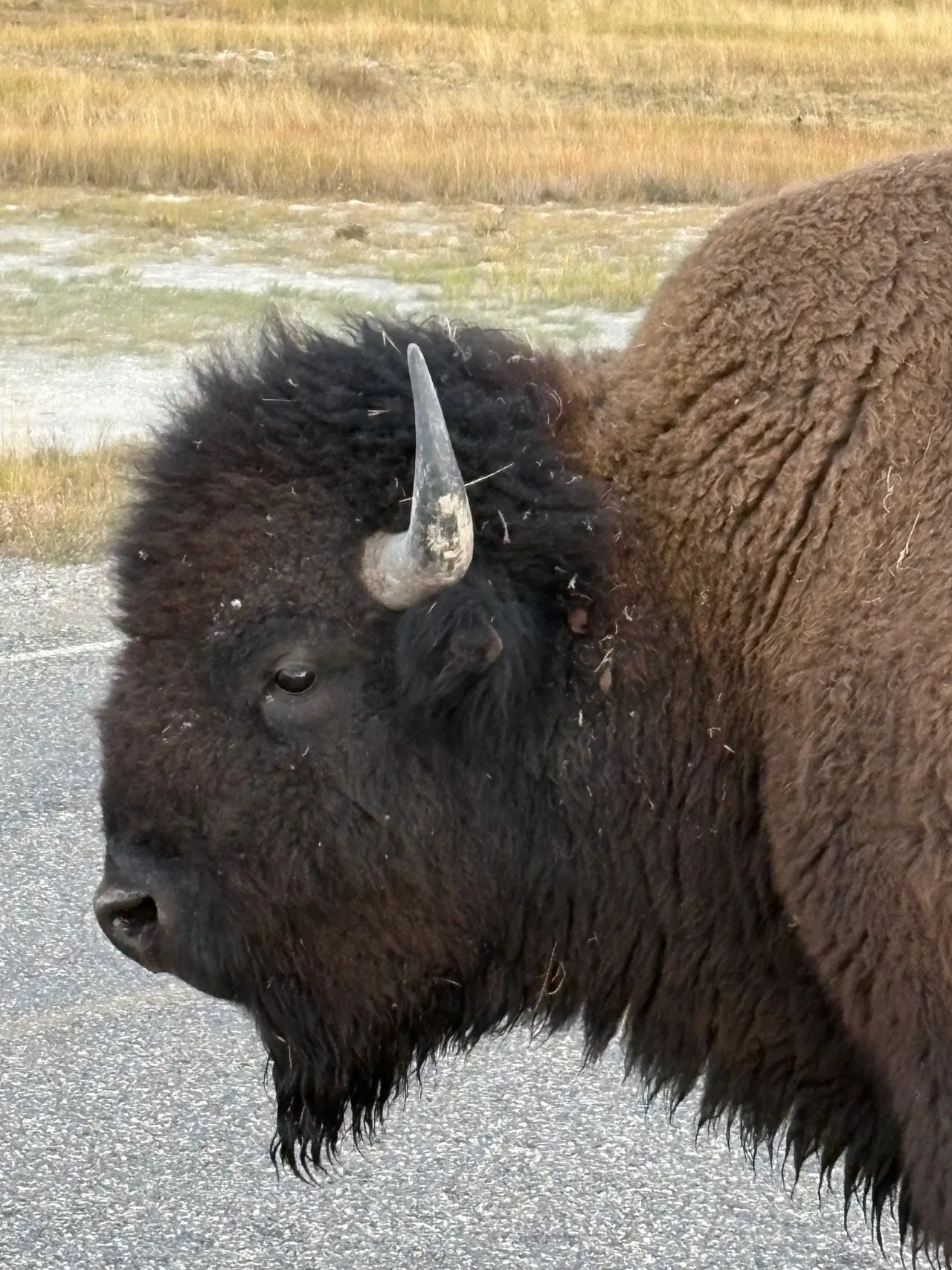
Most traffic jams happen because wildlife is nearby. Bison, elk, bears, and other animals frequently cross or even walk down the roadway.
Stay patient.
Your turn to see them will come.
Remember that these are wild animals. Keep a safe distance and follow the park’s recommendations.
Wildlife Is Most Active Early and Late
If seeing wildlife is high on your priority list, get into the park early in the morning or stay until evening.
We had our best wildlife sightings during the three or four hours before sunset.
Other visitors told us the early morning hours are just as productive.
Bring Good Binoculars
A quality pair of binoculars is almost a necessity.
Many times what appeared to be a rock in the distance turned out to be a bison, elk, or other wildlife.
If you own a spotting scope, bring it as well.
One afternoon someone told us where wolves had taken down a bison. We could see the bison through our binoculars, but we couldn’t make out the wolves until a kind gentleman let us look through his spotting scope.
Three wolves were resting beside their meal.
Without that spotting scope, we would have missed them completely.
Take Lots of Pictures
You’ll never regret taking too many pictures.
You can always delete extras when you get home.
Just remember to put the camera down once in a while.
No photograph truly captures the feeling of standing in front of Yellowstone’s incredible scenery. Spend a few moments simply enjoying the view.
I was amazed at how many people walked up to an overlook, snapped a selfie, and immediately walked away.
They missed the best part.
Pack Lunch, Water, and Snacks
Food is available throughout the park, but restaurants and snack bars aren’t everywhere.
Packing your own lunch gives you much more flexibility.
Some of our favorite meals were eaten while overlooking waterfalls, rivers, or open meadows where bison grazed nearby.
Slow Down
One of the biggest mistakes visitors make is trying to see everything.
Slow down.
Stop often.
Explore.
With four people in our group, someone was always spotting something the rest of us had missed.
Those unexpected stops often became our favorite memories.
Share What You Find
If you spot wildlife in the distance, point it out to others.
People did that for us several times, and we tried to return the favor.
It’s one of the things that makes visiting the national parks so enjoyable.
Be Courteous
Everyone is there to enjoy the park.
Take your turn at parking areas and overlooks.
Don’t force your way into crowded viewing areas or block traffic trying to get the perfect picture.
A little patience goes a long way.
Dress for the Conditions
Wear comfortable walking shoes.
Dress in layers because temperatures can change quickly depending on the weather and elevation.
Don’t forget sunglasses and a hat.
Visit the Ranger Stations
The park rangers and visitor centers are incredible resources.
Don’t hesitate to ask questions.
They know the park better than anyone and genuinely want you to have a great visit.
Walk the Trails
Whenever possible, get out of the vehicle.
Some of our favorite experiences came while walking short trails that many people simply drove past.
Again, the GuideAlong app was helpful because it described the length, difficulty, and estimated time for each hike.
Buy a National Park Pass
If you plan to visit more than one national park, purchase an America the Beautiful National Park Pass before your trip.
Besides saving money, pass holders often have dedicated entrance lanes that move more quickly through the entrance stations.
After only a couple of park visits, the pass usually pays for itself.
One Final Thought
If you find yourself feeling rushed or stressed, take a step back.
You’re doing Yellowstone too fast.
Find a quiet stream, a scenic overlook, or a peaceful meadow.
Sit down for a while.
Watch the wildlife.
Listen to the water.
Take a deep breath.
Yellowstone isn’t a place to hurry through.
It’s a place to experience.
Enjoy Rick's Ramblings?
If you found this post helpful or interesting, subscribe to receive an email when new posts are published.