
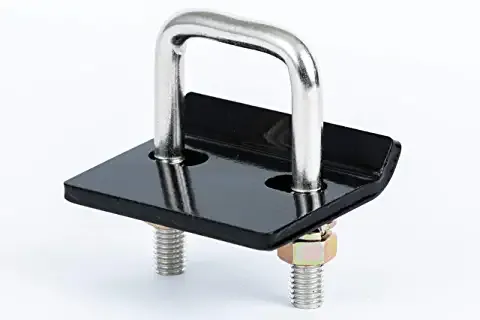
Bike Hitch Stablizer
Solving Our Bike Rack Problem
We enjoy taking our bicycles whenever we travel. They’re a great way to explore campgrounds, ride local trails, and see the area without having to move the truck.
Like many fifth-wheel owners, however, we ran into a problem.
There isn’t much usable space left in the truck bed once the hitch is installed, and I’m not a fan of storing bicycles inside the RV like some people do.
Fortunately, our Keystone Cougar came with a factory receiver hitch on the rear of the trailer.
Perfect, right?
That’s what we thought.
We installed our bike rack, loaded the bikes, and headed down the road assuming everything was fine.
Then we passed another fifth wheel towing bicycles on a rear-mounted rack.
The bikes were bouncing and rocking back and forth so violently that it immediately got my attention.
When we stopped, I looked at our own bike rack and realized our bikes weren’t much better. The movement was putting a tremendous amount of stress on the rack and the bike frame clamps.
We were traveling with friends, so I asked them to drive behind us and tell us what they saw.
Their answer confirmed my concerns.
The bikes were moving far more than I was comfortable with.
Looking for a Solution
Once we got home, I spent hours researching bike racks designed for fifth wheels and travel trailers.
Most of what I found wasn’t encouraging.
Many RV owners recommended not carrying bikes on the back of a trailer at all because the rear of an RV experiences much greater up-and-down movement than the tow vehicle.
I looked at front-mounted truck racks, but Pat quickly vetoed that idea because she didn’t like the way they looked.
I also saw some impressive custom racks welded near the hitch on the truck, but that wasn’t something we wanted to do either.
For a while, it looked like we’d have to leave the bikes at home.
The Best Research Sometimes Happens on the Road
One day while driving home, we found ourselves behind a long travel trailer carrying two bicycles on the back.
I immediately noticed something different.
The bikes weren’t moving.
No bouncing.
No swaying.
Nothing.
I tried to see what brand of rack they were using when we stopped at a traffic light, but I couldn’t get a good look.
When they turned onto a rural road, I made a decision that probably looked a little strange.
I followed them.
Right to their driveway.
As you can imagine, they were a little cautious when a stranger pulled in behind them.
Once I explained why I was there, everyone had a good laugh.
I asked what kind of bike rack they were using and what they had done to eliminate all the movement.
The answer surprised me.
A Twenty-Dollar Fix
They weren’t using a special bike rack at all.
They had simply installed a hitch stabilizer.
That was it.
After spending hours researching bike racks, I had never once come across anyone mentioning a hitch stabilizer.
I ordered one from Amazon, installed it, and the difference was amazing.
Our bikes no longer sway or rock back and forth while we’re traveling.
It turned out to be one of the best $20 investments we’ve made for our RV.
Final Thoughts
If you’re carrying bicycles on the rear of your fifth wheel or travel trailer and you’re seeing excessive movement, don’t assume you need to buy an expensive new bike rack.
A simple hitch stabilizer may be all you need.
It’s inexpensive, easy to install, and in our case, it solved the problem completely.
Now our bikes go with us on every trip—and we don’t spend the drive wondering if they’re still going to be there when we arrive.