
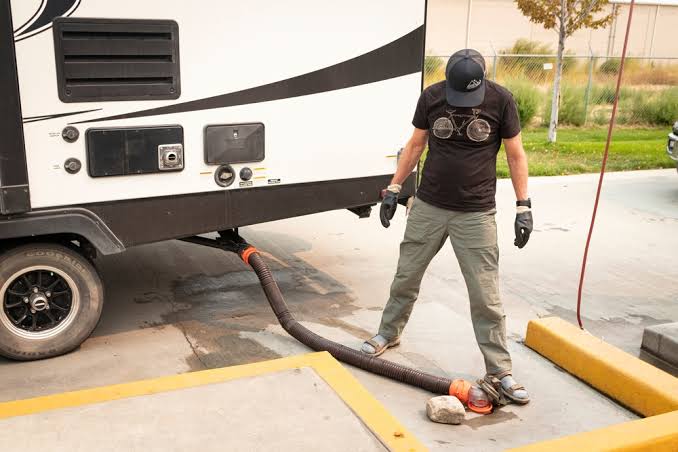
Don’t Tow Extra Weight in Holding Tanks
This is another good topic. I made a few factual corrections (gray and black water are slightly heavier than fresh water because of dissolved solids, though using 8.3 lbs/gallon is fine for estimating), tightened the writing, and made it read more like an article than a forum post.
Don’t Tow Around Hundreds of Pounds of Water You Don’t Need
If you’ve read our blog for a while, you know we follow several RV groups on social media. I find the discussions both entertaining and educational. Some posts are downright hilarious, while others make me wonder how many people have taken the time to learn about their RV and how it’s designed.
One topic that has come up repeatedly lately is holding tanks.
More specifically, holding tanks that have started sagging, broken loose from their mounting straps, or, in a few cases, actually fallen out from under the RV.
Water Is Heavy
Most RV black and gray holding tanks have capacities of around 40 gallons. Fresh water tank sizes vary depending on the RV, but many are also in that range.
Water weighs approximately 8.3 pounds per gallon.
That means a full 40-gallon tank weighs roughly 330 pounds.
Now think about your own RV.
Our Keystone Cougar fifth wheel has:
- One fresh water tank
- One black tank
- Two gray tanks
If all four tanks were full, we’d be towing well over 1,300 pounds of water and waste.
That’s more than the weight of many compact cars’ engines.
Why Carry It?
Imagine spending several days camping and finding a long line at the dump station as you’re leaving.
It might be tempting to skip the line and hit the road.
Personally, I’d rather wait a few extra minutes than tow hundreds of unnecessary pounds down the highway.
Besides increasing your trailer’s weight, full holding tanks place tremendous stress on the mounting straps, the trailer frame, suspension components, and even your tow vehicle.
Why Tanks Fall Out
Most of the failures I’ve read about involve the metal straps that support the tanks.
Those straps spend years supporting 200 to 300 pounds while the water inside is constantly sloshing, bouncing, and shifting as the trailer travels down the road.
Eventually, repeated stress can lead to metal fatigue, loose hardware, or cracked mounting points.
Once that happens, it’s only a matter of time before a tank begins to sag—or worse.
A Few Simple Ways to Prevent Problems
Fortunately, preventing these failures is fairly straightforward.
- Inspect the underside of your RV regularly. If something doesn’t look right, investigate it before it becomes a bigger problem.
- Empty your black and gray tanks before leaving the campground whenever possible.
- Travel with only the amount of fresh water you’ll need on the road. We usually carry just enough for flushing the toilet, washing our hands, and making a quick stop along the way.
- If you’re boondocking, fill your fresh water tank as close to your destination as practical. When you leave, dump your waste tanks at the first available opportunity.
- If you regularly travel with full tanks, consider reinforcing the factory tank supports or having them inspected for signs of fatigue.
Every Pound Counts
Like most RV owners, we already carry plenty of weight in food, clothing, tools, camping gear, and supplies.
Adding another 1,000 pounds of water and waste when it isn’t necessary just increases wear and tear on the RV while reducing fuel economy.
Whenever possible, leave the campground with empty waste tanks and only the fresh water you’ll actually need for the trip.
Finding a Dump Station
If you need to empty your tanks while traveling, a Google search is often the quickest way to locate nearby dump stations, although the information isn’t always current.
Another option is the SaniDumps directory, which is updated regularly and includes dump station locations, GPS coordinates, and directions.
A little planning can save you from hauling unnecessary weight and help prevent problems with your holding tank system.
Enjoy the journey!