
Don’t Be This (Guy) Campground IV
During our recent travels, we spent time in Yellowstone and Grand Teton National Parks before returning home through a couple of our favorite campgrounds in Minnesota.
Along the way, I noticed something that seems to be becoming more common, and I hope campground owners will take it into consideration.
This isn’t about an individual camper.
It’s about campground design.
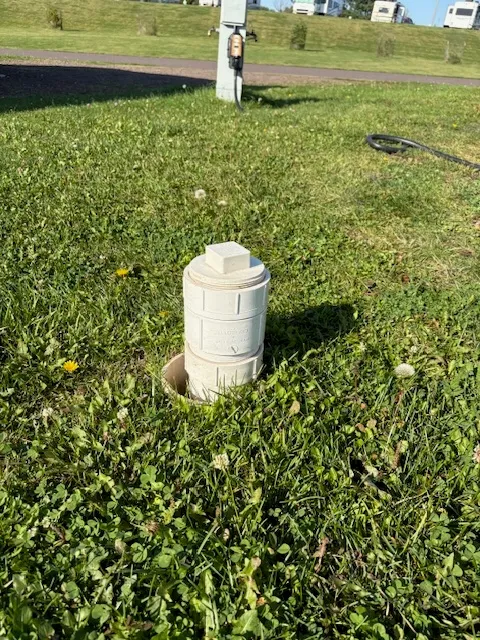
Over the past year, I’ve seen more and more campgrounds installing raised sewer connections at campsites. Most of the ones we’ve encountered extend about six inches above the ground.
I’m sure there is a reason.
Perhaps it’s to protect the fittings from lawn equipment or to comply with local building codes.
Whatever the reason, the result can create a real problem for RV owners.
For an RV holding tank to drain properly, gravity has to do the work. That means the sewer hose needs a continuous downhill slope from the RV to the campground connection.
Raise that connection six inches and, in some cases, you’ve eliminated the slope altogether.
In one campground in Wyoming, the raised sewer connection, combined with the way the campsite was graded, actually placed the campground inlet higher than the outlets on our fifth wheel.
There was simply no way to empty our holding tanks properly.
Fortunately, we were only staying five days, so using the campground dump station before leaving wasn’t a major inconvenience.
Had we been there for two weeks, it would have been a different story.
I noticed the extension was threaded onto the sewer fitting, and I briefly considered removing it. Unfortunately, it had been tightened so much that it wouldn’t budge.
Since then, checking the height of the sewer connection has become part of my campsite setup routine, especially if we’re planning an extended stay.
Update
After returning home, I contacted one of the Minnesota campgrounds where I encountered this issue.
The manager explained that Minnesota building code requires the sewer inlet to extend four inches above grade.
That makes sense.
The problem wasn’t the code.
The problem was that the connection at this campground stood well over six inches above the surrounding ground, and the campsite grading made the situation even worse.
My suggestion to campground owners is simple.
Meet the required building code, but also pay attention to how the campsite is graded. The goal should be to allow RV owners to empty their holding tanks without having to move to the dump station every few days.
It’s a small detail that can make a big difference in the camping experience.
Safe travels.