
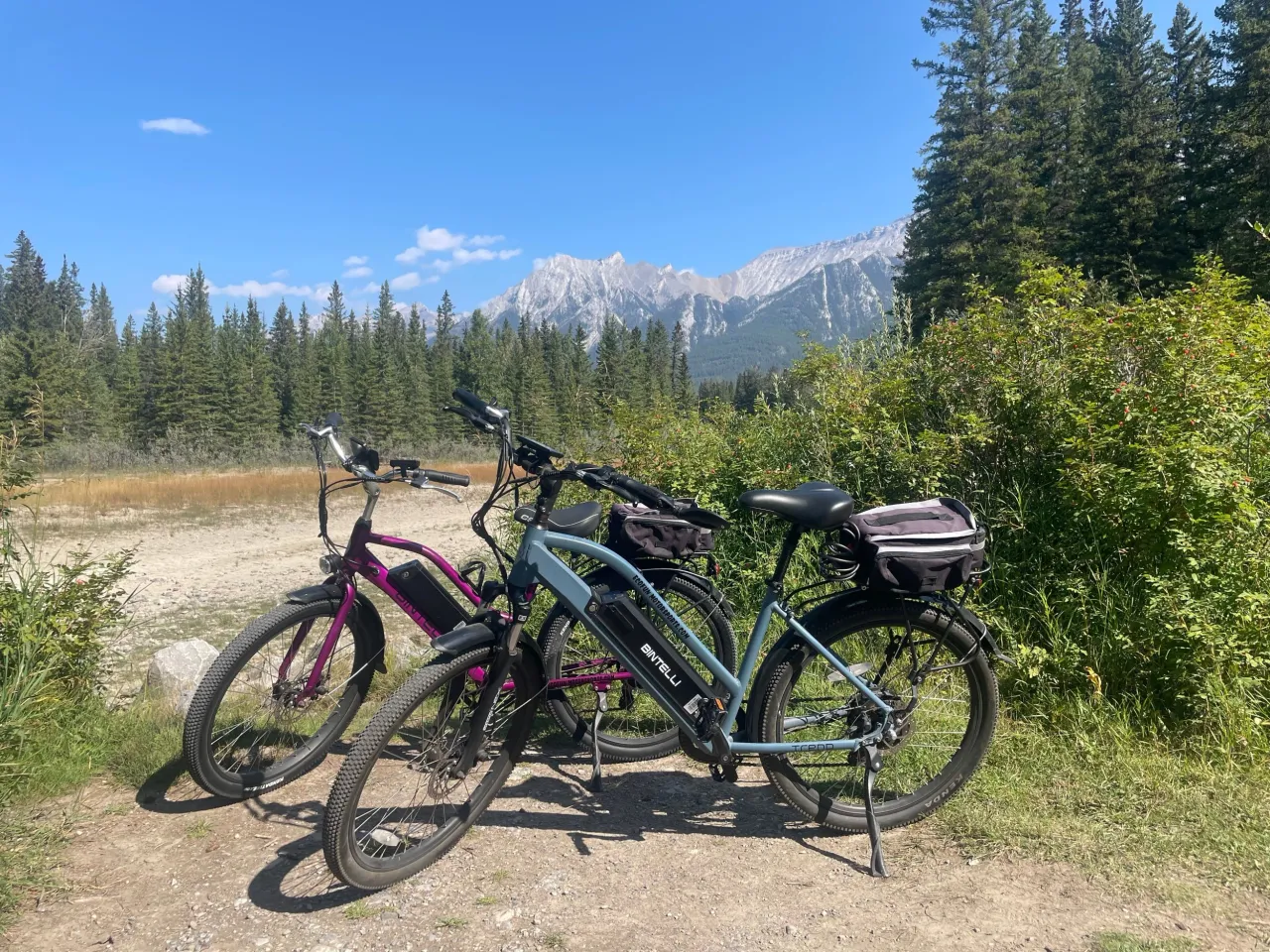
Ebikes and Batteries
We became believers in e-bikes in 2022.
While visiting Sanibel Island, one of our favorite destinations, we decided to rent electric bikes instead of traditional bicycles. We were sold before we even left the parking lot.
The pedal assist allowed us to see much more of the island than we ever had on regular bikes. We still got plenty of exercise because you can adjust the amount of assistance the motor provides, but we weren’t worn out after only a few miles.
When we returned home, a local bike shop, EcoFun Motorsports, was running a sale on their e-bike line. We purchased two Bintelli bikes and have been enjoying them ever since.
They’ve become a regular part of our travels.
I found a rack that carries them securely on the back of our fifth wheel, and we use them both at home and whenever we’re camping. With our traditional bicycles, we’d usually ride only a few miles, especially if the terrain was hilly. We’re recreational riders, not serious cyclists, and the hills often determined how long we’d stay out.
The e-bikes changed all of that.
During our first year of ownership, we logged more miles than we had ridden on our traditional bicycles during the previous ten years combined.
Since buying them, we’ve accumulated well over 900 miles. We routinely ride 20 to 25 miles in a day, and by then it’s usually our backsides—not the batteries—that are ready to call it a day.
Simply put, we love our e-bikes.
Unfortunately, every story has a downside.
I followed the manufacturer’s recommendations for storing the batteries over the winter. I kept them indoors where they stayed warm and charged them periodically throughout the offseason.
In March, we had a warm spell, so I installed both batteries and took a short ride around the neighborhood. Everything worked perfectly.
About a month later, we were in Waco, Texas, on our way to Galveston. We planned to spend a couple of days exploring the city, including Magnolia Market and the surrounding area. We were staying at Magnolia RV Park, a beautiful campground that made a great base for sightseeing.
I unloaded the bikes, installed the batteries, and…
Nothing.
One battery was completely dead.
No indicator lights. No response from the charger. It simply wouldn’t come back to life.
That started my search for a replacement.
One thing I quickly discovered is that e-bike batteries are far from standardized. Even batteries that look nearly identical often use different voltages, mounting systems, or electrical connections. Finding the correct replacement wasn’t nearly as simple as ordering one online.
To make matters worse, I discovered there wasn’t a Bintelli dealer anywhere nearby in Texas. I ended up contacting the dealer where we purchased the bikes to see if they had a replacement battery available and whether they could ship one to us.
Then came the real surprise.
A replacement battery cost about $550, roughly one-quarter of what we originally paid for the entire bike.
That certainly gets your attention.
At one point, I had considered buying a spare battery for each bike to extend our riding range, but after seeing both the cost and weight of the batteries, I quickly decided against it. Carrying an extra battery while riding isn’t especially practical, and renting a bike for a day would probably cost less than overnight shipping a replacement while traveling.
The experience reminded me that batteries are one of the major long-term ownership costs with e-bikes.
Even so, we haven’t changed our opinion of them.
They’ve allowed us to explore places we never would have seen on traditional bicycles, and they’ve become one of our favorite ways to enjoy campgrounds, small towns, and scenic trails.
Like any piece of equipment, they’re not perfect.